Thursday, 24 March 2011

Marton Perlaki


A post in haste. Lots of images, a few words.
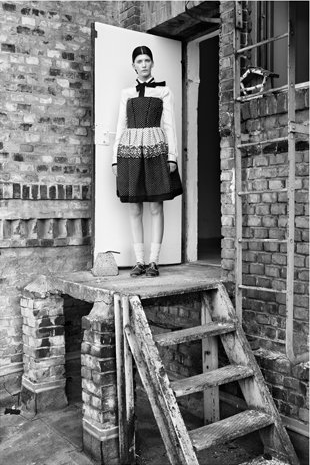
Marton Perlaki - young, Hungarian and already with a distinctive, mesmeric style, is obviously a photographic talent to watch. A regular contributor to The Room, the standout Hungarian fashion title, in the model Valejira he already seems to have found his muse too. Enjoy.


All images © Marton Perlaki


Wednesday, 16 March 2011

Vinaròs Microcoasts


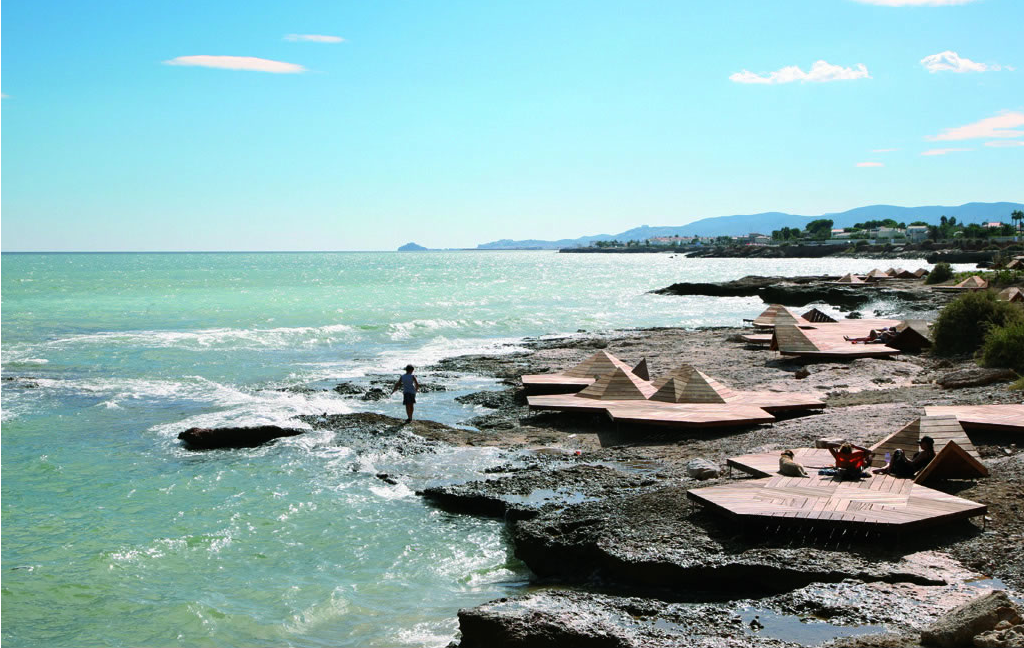
Taking first prize in a Spanish competition in 2007 with this innovative project, Barcelona-based Guillart Architects created these striking wooden platforms based around hexagons, allowing local residents of Vinaròs to use the coastline around their town more freely.
Roughly halfway between Barcelona and Valencia, Vinaròs has a sparkling sea and a beautiful coast filled with coves, promontories and inlets, but instead of any welcoming beaches there's only rough and unforgiving rock strata. Not ideal for a Sunday picnic with the family.
Choosing the standout spots close to the ocean, Guillart Architects set simple hexagonal grids into the rock, which were then covered with timber panels which can be positioned flat, partially or fully folded, creating their own 'microtopographies'. Stunning as pieces of sculpture in their own right, these platforms were quickly embraced by the locals whose sunbathing activities had for years been a jagged and painful experience.


Photographs © Nuria Diaz


Wednesday, 2 March 2011

Sun Moon Lake visitor centre


Japanese architecture firm Norihiko Dan and Associates recently designed this striking visitor and admin centre at the Sun Moon Lake, the largest body of water in Taiwan. The lake is one of the country's biggest tourist attractions, and an island that sits in the middle called Lalu is even considered sacred by the indigenous Thao tribe. The new visitor centre is an amazing, sinuous design, which slopes gently upward from the landscape on one side, rising to face the water on two different levels with a long curving balcony with amazing views over the water. The functional, brutal concrete is grassed over on the roof, but the contrast of this staple building material, set against the lush green countryside and the clear water in this incredible setting make for a very special project.
Click on the images to see them larger - the final one in particular is worth a closer look.


All photographs © Anew Chen, courtesy of Norihiko Dan and Associates


Tuesday, 22 February 2011

Anne de Vries


“The idea of photography as a way to experience the world as it is not - in different ways - is fascinating to me, transforming the known into an unknown.” So says Dutch photo artist Anne de Vries, and looking at the wealth of ideas and experimentation on show in the work you can see he's a man of his word. Whether playing with overlaid identical images which he cuts sections out of, thus revealing more of the same image on different deeper levels, or photographing the reflection of cave paintings in wrinkled aluminium foil, de Vries is out to see how far can an image be pushed whilst leaving it readable. He takes great delight in finding ways of subverting apparently straightforward images, as with the impossible flora in 'Plan' or the melting saccharin junk food in 'Eye Candy'.
As well as rephotographing images, de Vries has begun to experiment more with digital possibilities, such as the moving image collaboration with musician James Whipple, Forecast. Take a look.


From 'A vs B', with Billy Rennkamp


From the 'Cave 2 Cave' series


Group Face


Accumulations


From 'A vs B', with Billy Rennkamp


Infinite Value


From the 'Modern Unpromised' series


Plan


From the 'Cave 2 Cave' series


Eye Candy, with Janis Ponisch


All images © Anne de Vries


Thursday, 3 February 2011

Daniel Aires Grazina


ECAL, the art school in Lausanne, Switzerland, is a formidable proving ground for talented young Swiss creatives, and Pierre Fantys, the Head of the Photography Department there, has helped mould and polish a generation of fascinating and inventive photographers. Daniel Aires Grazina is one of the most interesting graduates from last year, and true to ECAL form, much of his imagery involves elaborately constructed dioramas and fantasies. The Nature Humaine series, shown here in colour, is Grazina's attempt to create idealised natural scenes within an obviously domestic environment. The cascading waterfall surrounded by verdant ferns tumbling out of kitchen units, or the miniature sand-swept Monument Valley discovered in the corner of a room hint at utopias found in the most unlikely places at home, a meeting of the banal and the picturesque.
The black and white series, showing inventive destinies for the most mundane objects, is from a collaboration with fellow ECAL graduate Charles Negre, another interesting talent whose work explores fantastical scenarios in the most unexpected places.


From Le Cabinet, 2010, with Charles Negre


From the Nature Humaine series


From Le Cabinet, 2010, with Charles Negre


From the Nature Humaine series


From Le Cabinet, 2010, with Charles Negre


From the Nature Humaine series


All images © Daniel Aires Grazina except where noted